Concept
In the deep ocean, bioluminescence is not just decoration. Many creatures glow brighter when threatened. Firefly squid, siphonophores, certain jellyfish species all do this. The light is involuntary. It is a biological fear signal, and every creature nearby can read it.
That is the idea behind this sketch. It is a flocking system where light and movement share the same variable. Each boid’s proximity to a descending predator controls both how hard it steers away and how brightly it glows. Fear is brightness. The swarm illuminates itself at the exact moment it is most in danger.
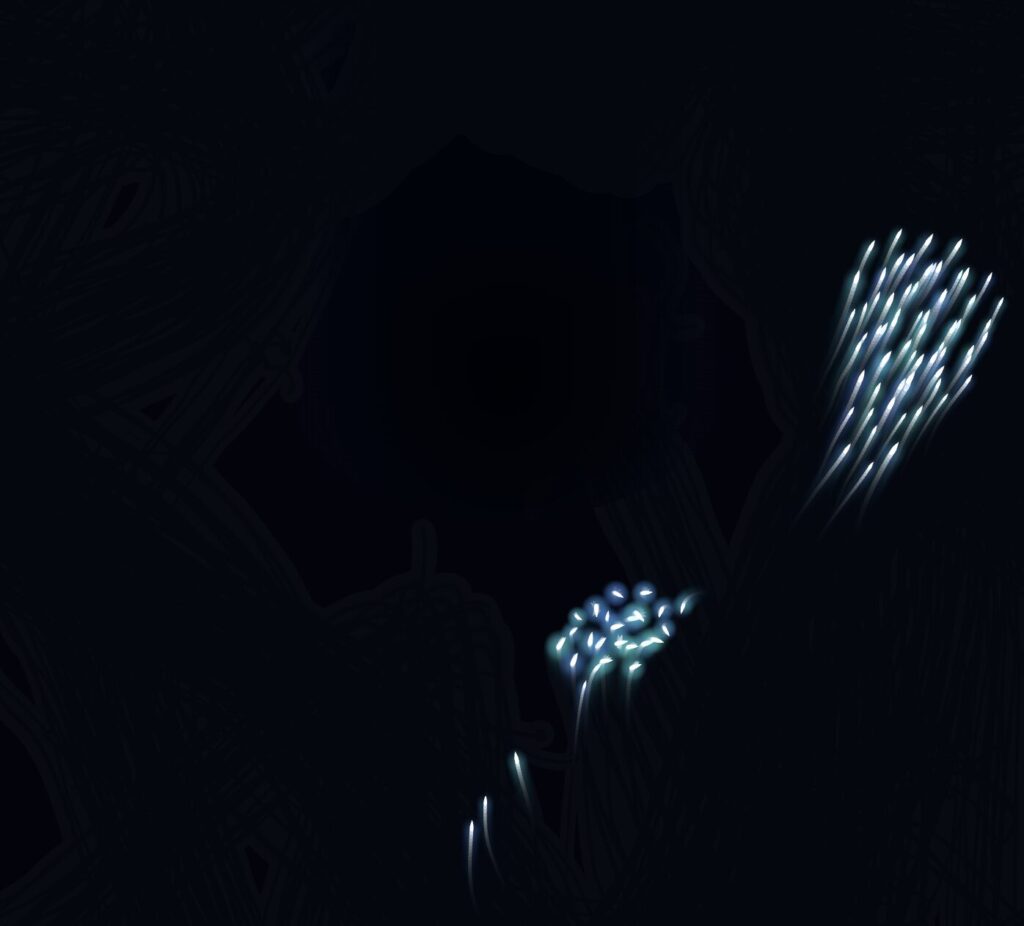
The piece moves through three acts. First, creatures drift in near-total darkness, sparse, slow, barely visible. Then a shadow descends from above. Not fast, not aggressive, just a pressure. The boids closest to it sense it first and begin moving away, the fear-glow spreading outward through the swarm. Finally the predator arrives fully and the swarm explodes outward in a burst of light. Then silence. The survivors scatter into the dark, dimmer than before.
Embedded Sketch
Code I’m Proud Of
The piece’s central idea lives in about ten lines inside the Boid class. this.fear is a single float between 0 and 1 computed from distance to the predator. It does two jobs at once: it scales the steering force pushing the boid away, and it is read by draw() to amplify the glow radius and opacity.
// Inside applyPhaseForces(), descend phase:
let toPred   = p5.Vector.sub(this.pos, createVector(pred.x, pred.y));
let d        = toPred.mag();
let fearZone = 280;

if (d < fearZone) {
  this.fear = map(d, 0, fearZone, 1.0, 0);
  toPred.normalize().mult(this.fear * 0.38);
  this.acc.add(toPred);
} else {
  this.fear = 0;
}

// Inside draw():
const baseAlpha = 0.60 + fearGlow * 0.40;
const glowR     = this.size * 2.2 + fearGlow * 5;
The same number that moves the creature also lights it up. I did not need a separate brightness system. That reduction felt like the sketch finding its own logic rather than me imposing one.
Milestones and Challenges
Milestone 1: Basic flocking
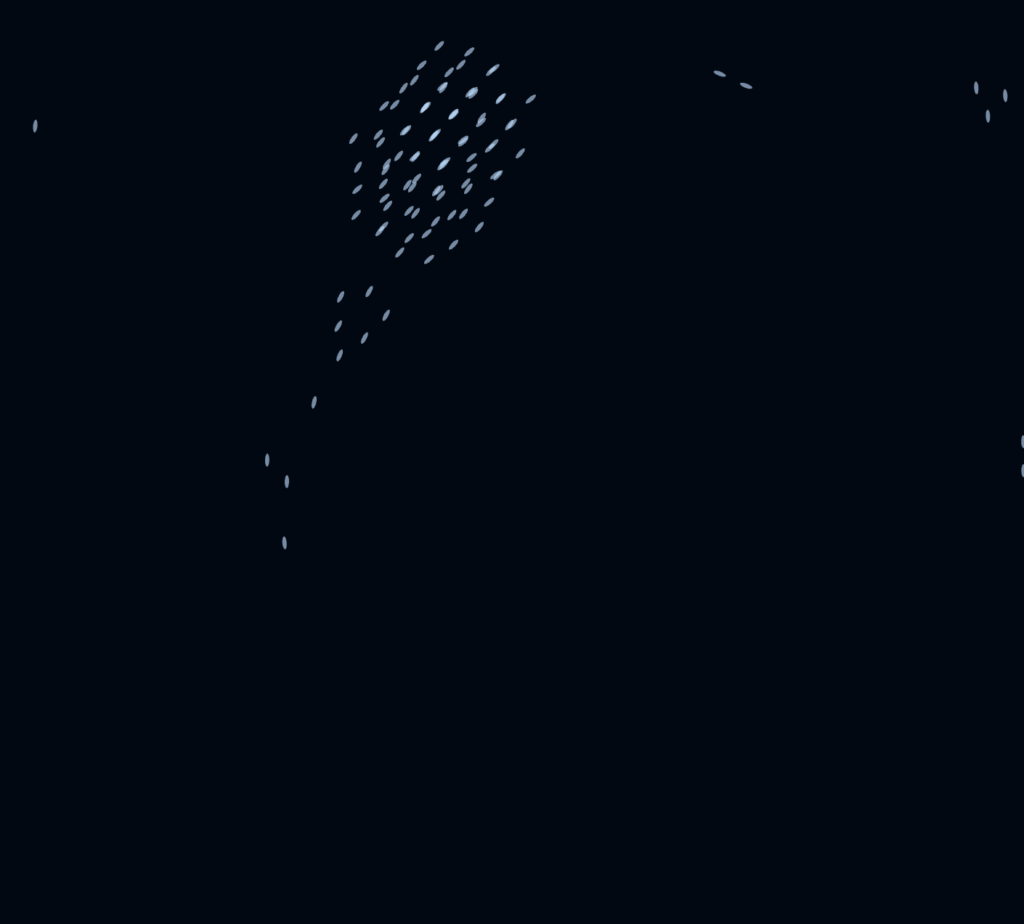
The first working version was just the three steering forces running on a plain black background. No phases, no predator, no glow. Getting alignment, cohesion, and separation balanced took more time than expected. At equal weights the boids collapsed into a tight unmoving ball. I had to bring cohesion down significantly and give separation more authority before the swarm started feeling alive.
Milestone 2: Adding bioluminescent glow
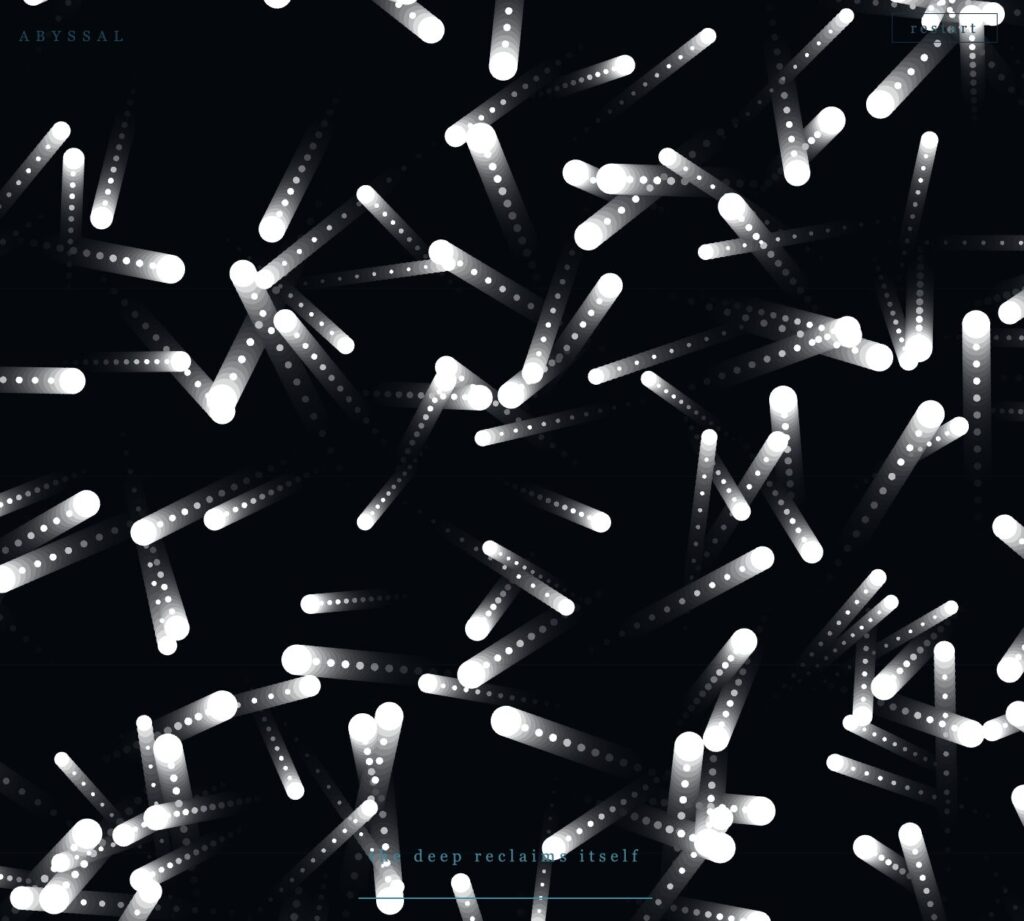
Once the flocking was stable I replaced the flat ellipse with a radial gradient halo drawn through drawingContext. This is where the creatures started feeling like they lived underwater rather than on a screen. I also added the teardrop body shape and started assigning each boid a random hue in the cyan-to-violet range.
Milestone 3: The predator as pressure, not shape
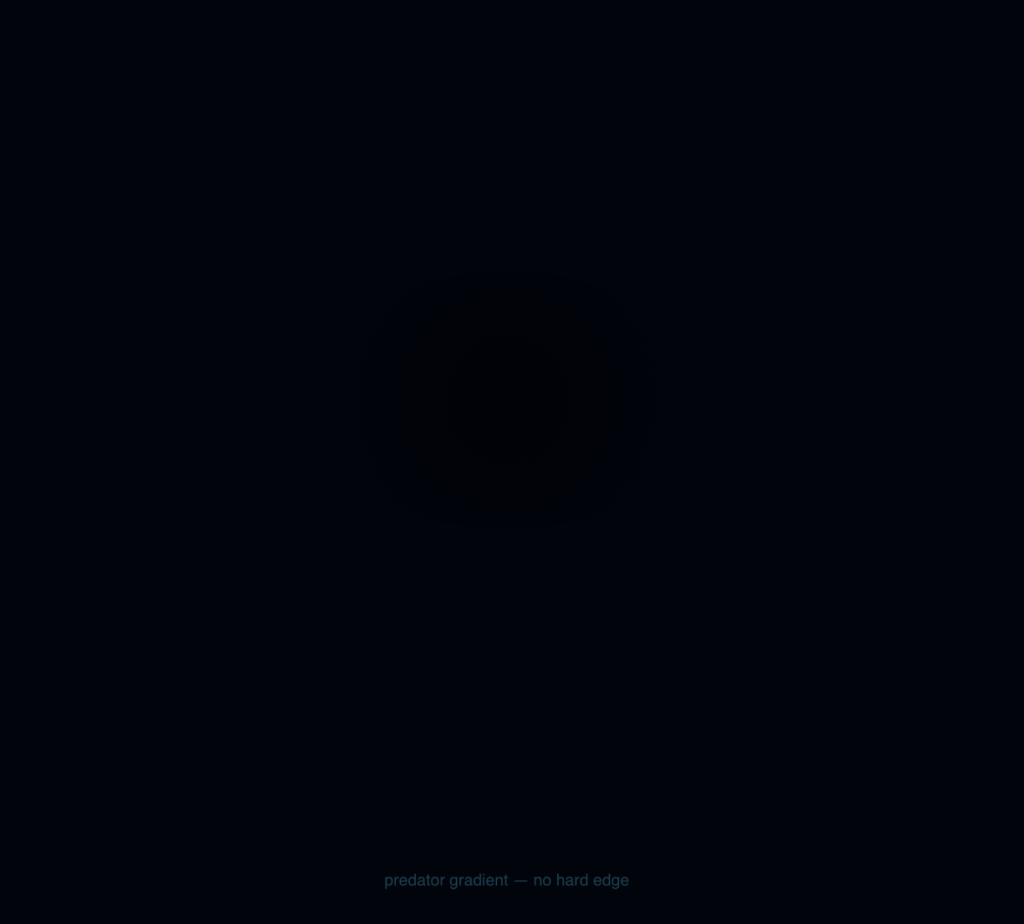
My first predator was a solid dark ellipse and it looked like a game obstacle. The fix was removing any hard edge entirely and replacing it with a radial gradient that fades to nothing — an absence of light rather than a presence of shape. This one change made the whole sketch feel more like an environment and less like a simulation.
Milestone 4: Fear driving both movement and light
This was the central technical challenge. Once the predator was descending I needed the boids to respond to it — not just steer away, but glow brighter as they got closer. The insight was that these could be the same number. I computed this.fear as a map() of distance and fed it into both the physics and the renderer simultaneously.
Reflection
The fear-as-light mechanism worked the way I hoped. Watching the swarm light up at the moment of greatest danger, because of the danger, gave the piece a logic that felt biological rather than programmed.
A few directions I would take this further. Sound is the most obvious missing layer. The panic phase has a visual density that feels like it needs a corresponding audio response, something close to how Kurokawa synchronizes brightness and sound intensity. The predator could also be made reactive rather than scripted, hunting the brightest cluster in the swarm. This would create a feedback loop where fear-glow attracts the very thing the swarm is afraid of. Individual boid memory would also add depth. Creatures that were nearly caught could stay darker and more erratic for longer, while those that escaped early return to calm faster. Trauma as a behavioral variable rather than just a visual one.
References
Ryoichi Kurokawa’s audiovisual works were a direct influence, specifically how he treats light density as a rhythmic and emotional variable rather than aesthetic decoration. Robert Hodgin’s fluid creature systems shaped how I wanted the boids to feel: biological rather than mechanical.