
Simulating the Free Movement of Clouds
Concept
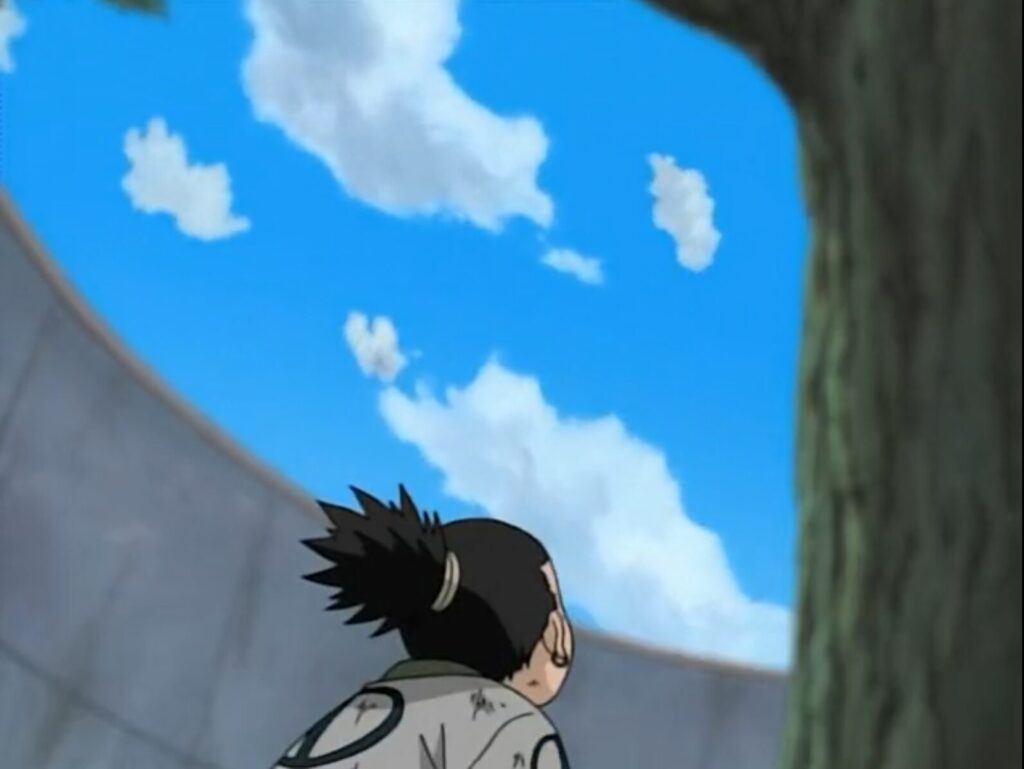
This assignment is inspired by a scene from my favorite anime “Naruto” in which a character looks up at the sky and expresses a desire to be like the clouds, moving freely without worry and simply following the wind. That idea of effortless movement and quiet reflection became the foundation for this simulation.
To connect this idea to real world motion, I found a video online of clouds slowly drifting across the sky and used it as a reference. Rather than focusing on the visual appearance of the clouds, the emphasis was placed on replicating their movement. The behavior in the sketch is controlled entirely through acceleration, allowing motion to emerge naturally from wind like forces over time. While the clouds all move in the same general direction, small variations in their movement prevent the motion from feeling uniform or repetitive.
The intention of this assignment is to recreate the calm experience of watching clouds pass by, capturing a feeling of flow and freedom through motion rather than visual detail.
Code Highlight
A key part of the simulation is how wind direction and strength are controlled using Perlin noise, which provides smooth and natural variation over time:
let baseWindAngle = PI; // base direction pointing leftwards
let noiseVariation = (noise(frameCount * 0.003 + this.offset) - 0.5) * (PI / 6);
let windAngle = baseWindAngle + noiseVariation;
let wind = p5.Vector.fromAngle(windAngle);
wind.setMag(0.05);
this.acc.add(wind);
Here, each cloud experiences a base wind force pushing it leftwards (PI radians), with subtle angle variations added by noise for a natural, organic drift.
Embedded Sketch
Reflection and Future Ideas
This project helped me understand how motion driven entirely by acceleration can create lifelike, organic behavior without directly manipulating position or velocity. Using Perlin noise to vary the wind direction over time introduces natural unpredictability, allowing each cloud to move with variation rather than uniform motion. Watching the clouds drift smoothly across the canvas feels calm and meditative, similar to observing real clouds moving through the sky.
In the future, this system could be expanded by allowing clouds to interact with one another, respond to changing environmental conditions, or evolve based on different wind patterns. Small visual enhancements, such as lighting changes or atmospheric shifts, could also be explored while keeping the movement rooted in physics-based rules. Overall, this simulation captures a quiet moment of nature’s flow and reflects the peaceful experience of simply watching clouds pass by.